

Modernizing Neo’s checkout: dividing the number of steps by 4
The checkout is the final step in Neo’s booking process, following the Trip Overview page (cart page). It’s where travelers complete the last details of their reservation. As one of the most strategic touchpoints in the traveler journey, it plays a key role in finalizing bookings and directly impacts conversion rates
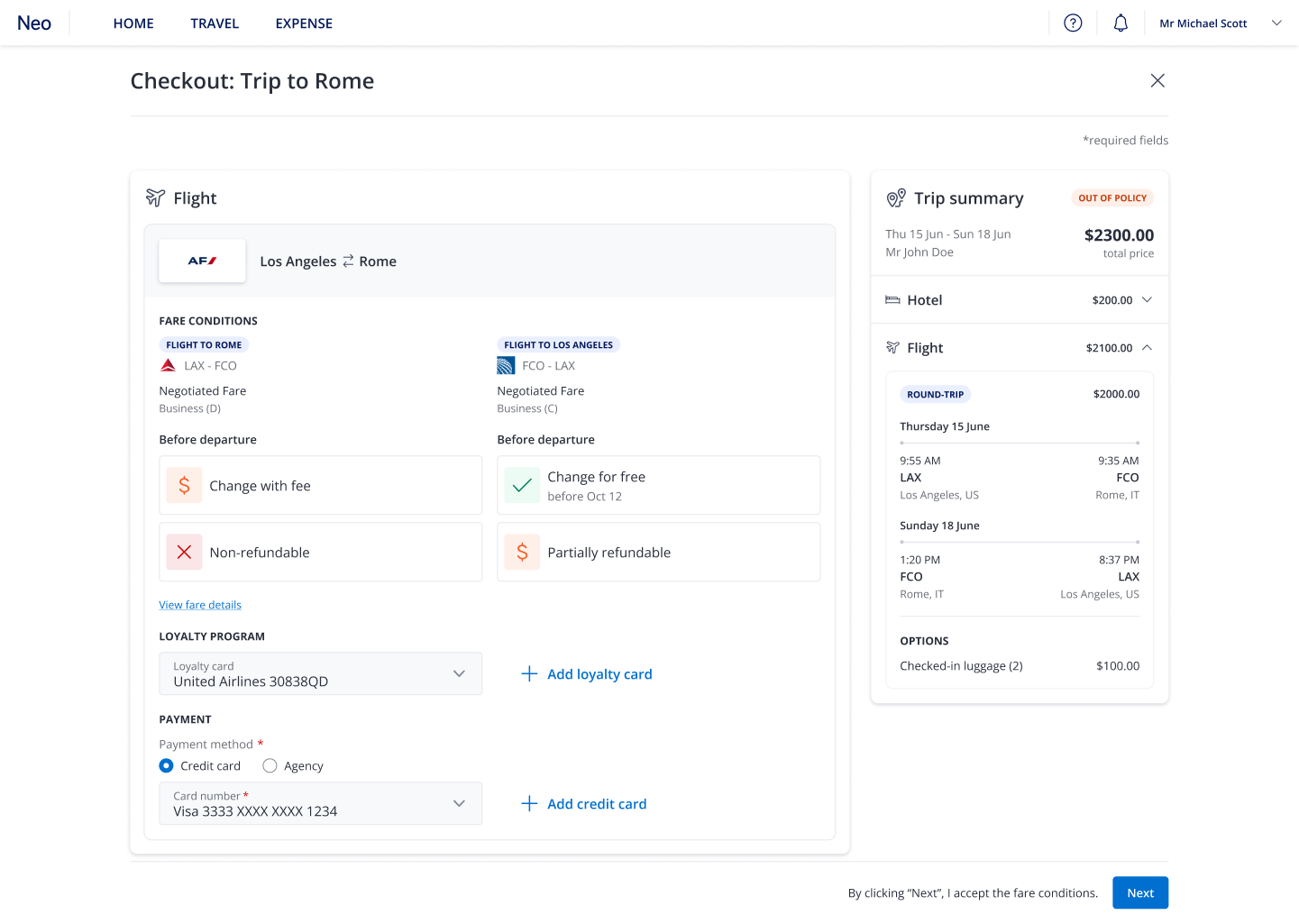
Problem Statement
Neo is a business travel platform that allows users to book hotels, trains, and flights.
Once selections are made, users proceed to the checkout process, where they can:
Select a payment method
Add a loyalty card
Confirm their email address
Choose their ticket delivery method
However, the current checkout process relies on outdated technology (KCR), leading to inconsistencies as some pages have been migrated to newer systems while others have not. This fragmentation creates a disjointed user experience and contributes to significant technical debt.
The goals of the checkout migration were to address these issues by providing a unified experience, reducing technical debt, and introducing new features.
Challenges
The first major challenge of this project was time. The original checkout process consisted of 19 steps, each represented by a separate screen that needed to be analyzed, sorted, retained, or discarded.
The second challenge was resource constraints. For years, progress was slow due to having only one developer assigned to the migration. By the time the project was prioritized, some pages had already been migrated, but their design was outdated.
The primary goal, therefore, was to create a modern and sustainable vision for the checkout process that could withstand the project’s extended timeline. Additionally, there was a critical business challenge, as several Neo prospects declined to adopt the platform due to the limitations of the existing checkout experience.
Goals & Objectives
Reduce the number of steps in the checkout flow to create a faster and smoother booking experience
Standardize page layouts and components to ensure a consistent design and user experience
Identify and prioritize opportunities for new features to minimize drop-offs and encourage users to complete their reservations
Design Process
As this project was suddenly prioritized, there was no time to conduct user research. I therefore established a plan to move quickly and make informed decisions.
I enlisted the support of another designer for the research phase, then focused on shaping the vision in close collaboration with the Product Manager.
Market research
I started by establishing a benchmark, checking what our competitors' checkout looked like.
I decided to have a look at:
Travel booking platforms (B2B & B2C)
Globally used sites (Apple, Amazon & Backmarket for the French market)
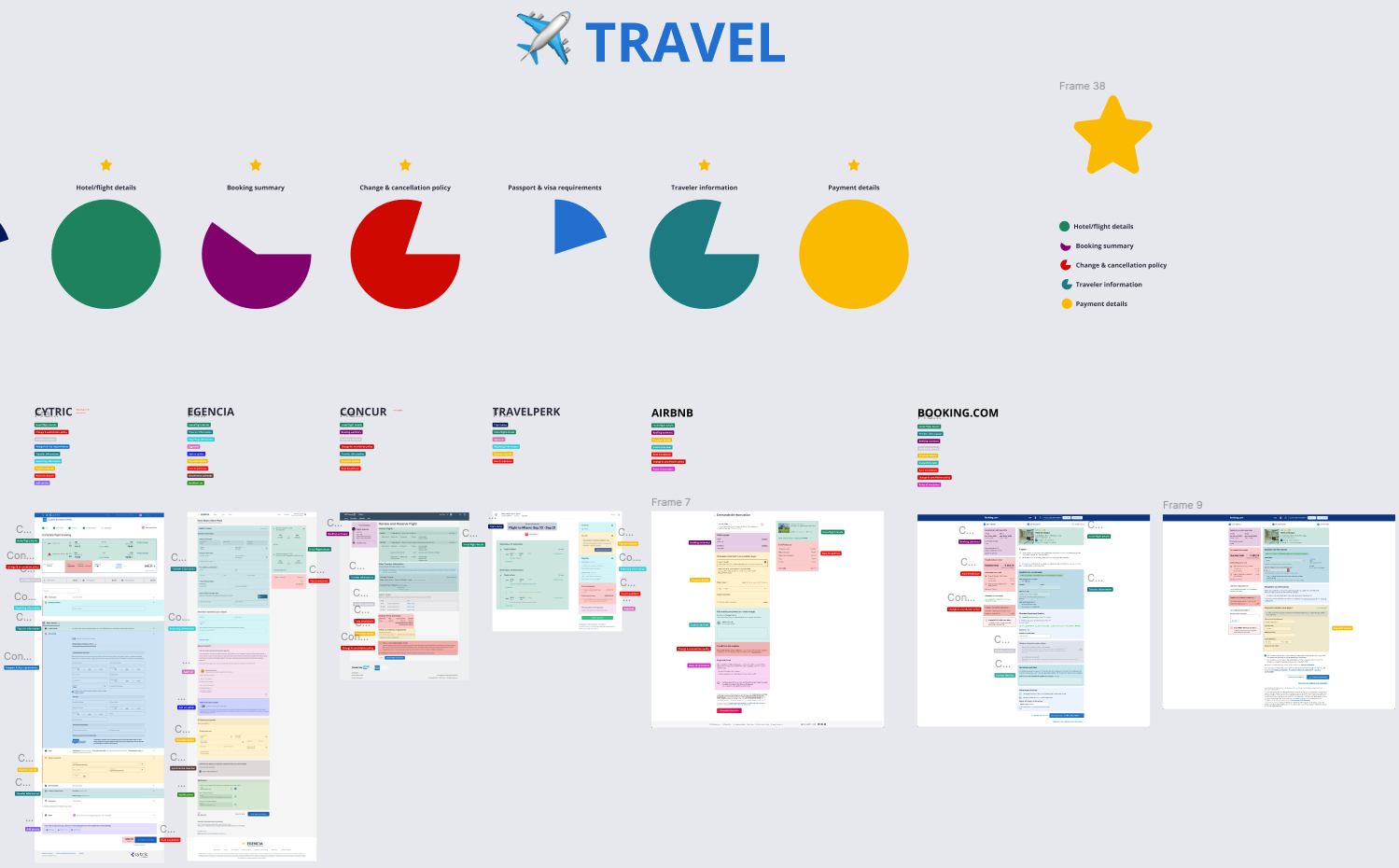
For each site, I listed the various elements making up the checkout, then identified the recurring patterns we could also need in the Neo checkout. I also noted the different flows and how the pages were constructed (layout, information hierarchy, etc.).
Audit
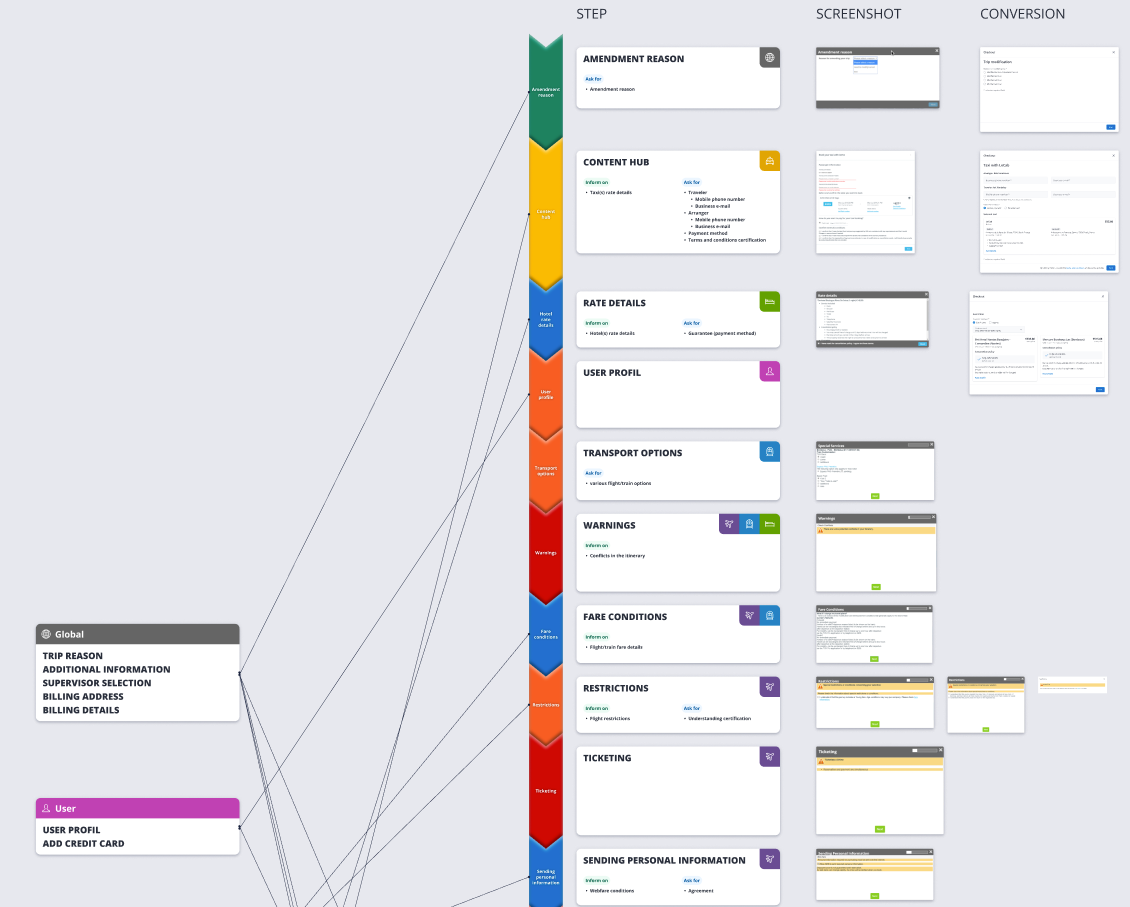
While I was focusing on the benchmark, the other designer mapped out the existing steps of the Neo checkout process, determining which steps to retain, merge, or eliminate.
This analysis also allowed us to identify pages that had already been migrated and assess the current state of the checkout, providing a clear foundation for the next steps in the project.
Interviews & tests
With a clear understanding of the must-haves and nice-to-haves, I crafted an initial prototype and conducted some tests with internal Neo users. During these sessions, I interviewed participants about their checkout experience and tested my preliminary design concepts.
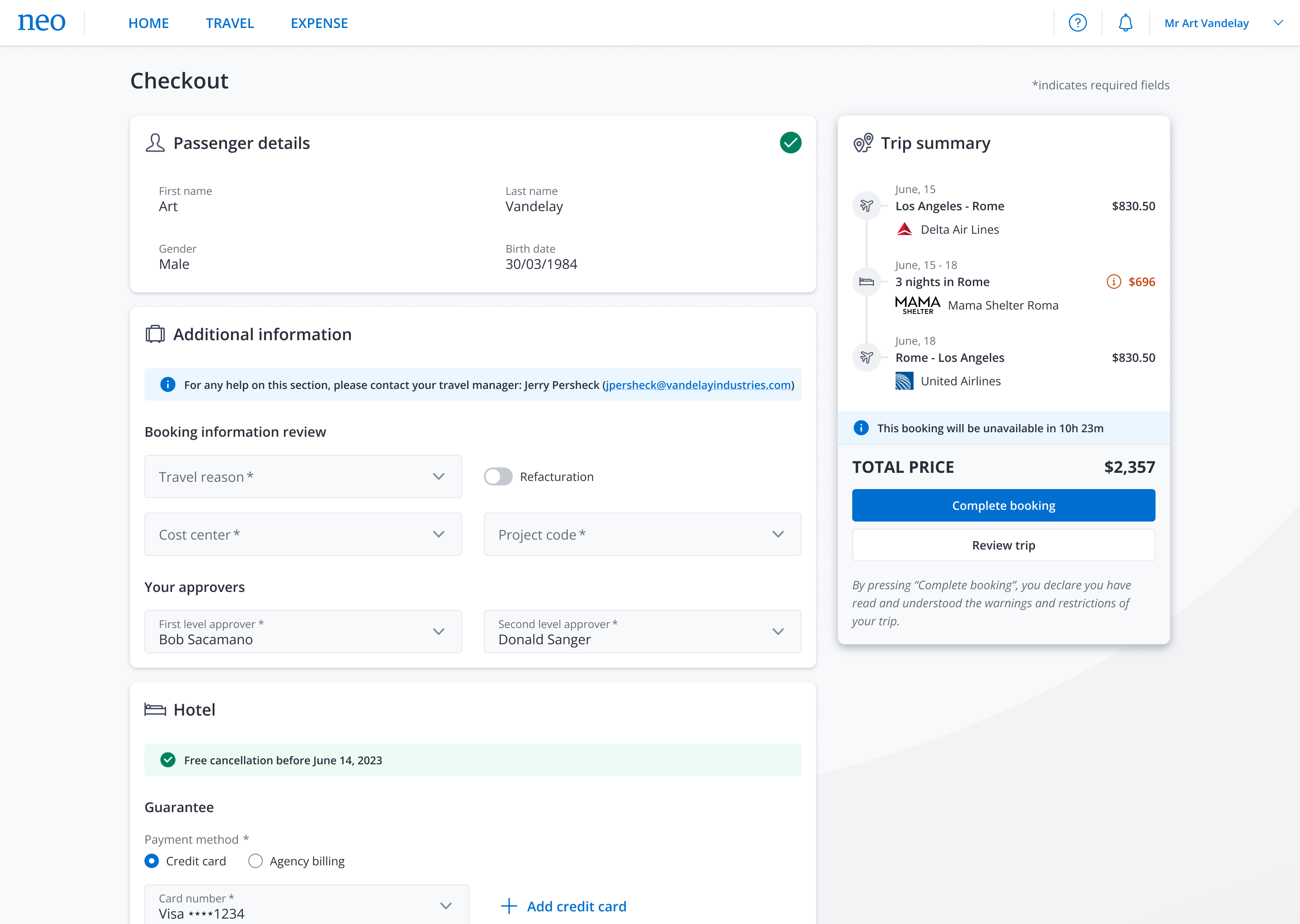
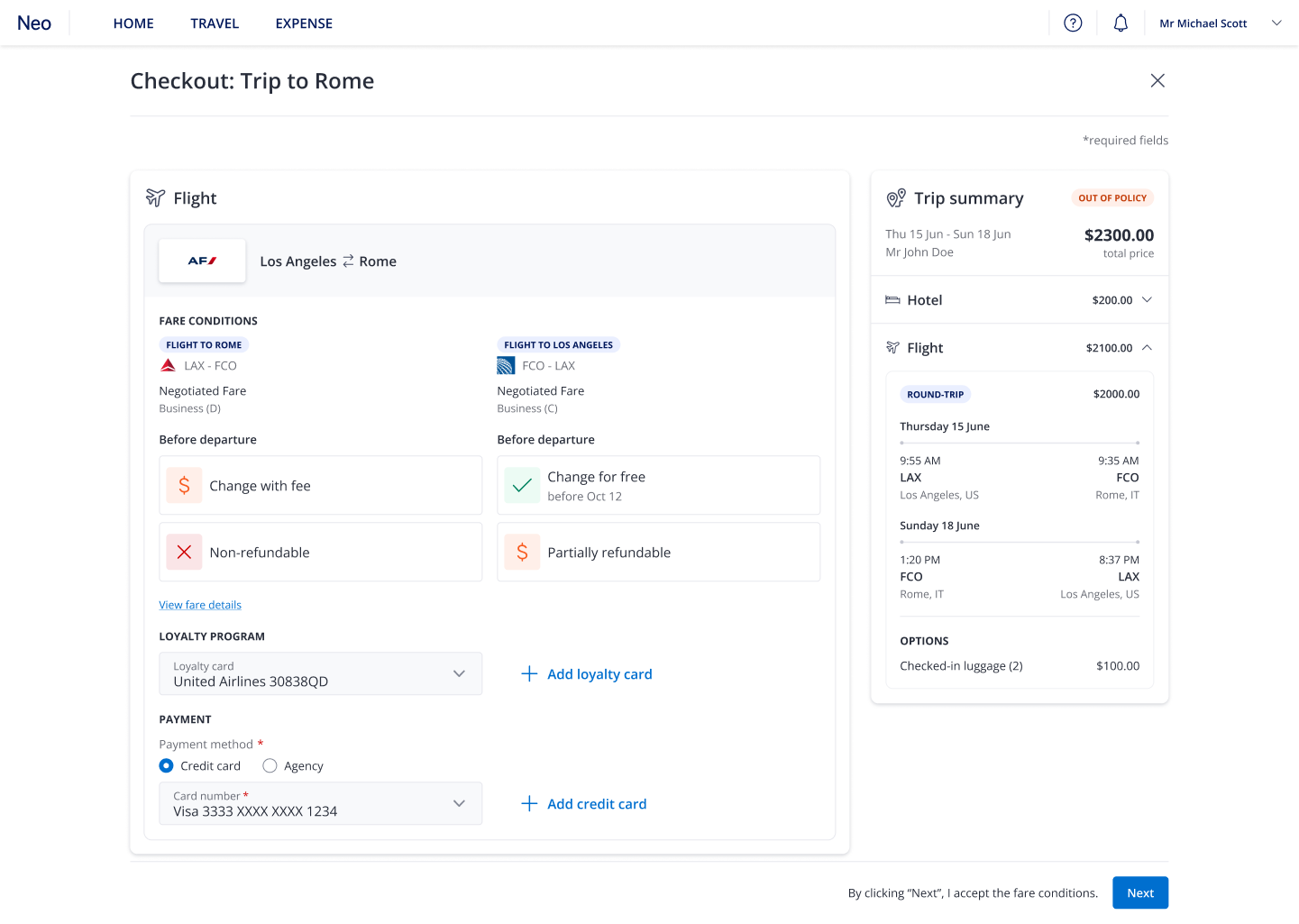
More information could be added to the trip summary: it would be useful to have the flight details (e.g., time of departure and arrival), for example, if I have to book a taxi upon arrival.
Building the vision
Based on the feedback from testers, I collaboratively refined the vision with the PM and presented it to key project stakeholders, including other Product Managers, developers, and customer-facing teams.
After incorporating their feedback, we finalized the vision and shared it with the Scrum team responsible for the checkout project, including developers and QA engineers.
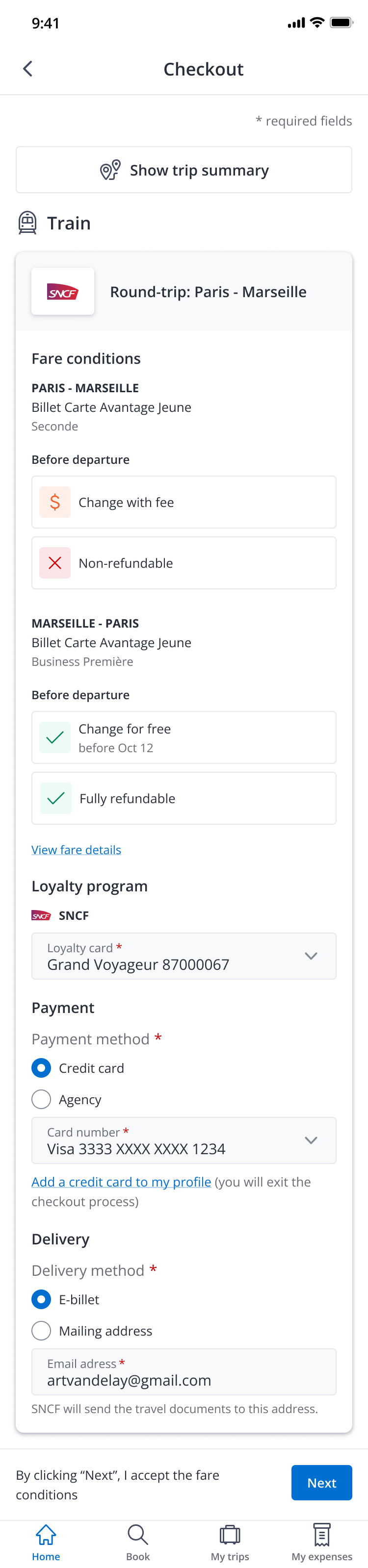
Mobile version
Delivery
The entire Scrum team collaborated to break down the epic, and we agreed to migrate the checkout in multiple phases to ensure efficiency and scalability.
We’ve successfully migrated the hotel and transport checkout steps, and I have now handed this project over to another designer.
Throughout the migration, I provided detailed specifications to developers, ensuring all use cases were covered, and worked closely with them daily to maintain alignment and ensure a smooth migration.
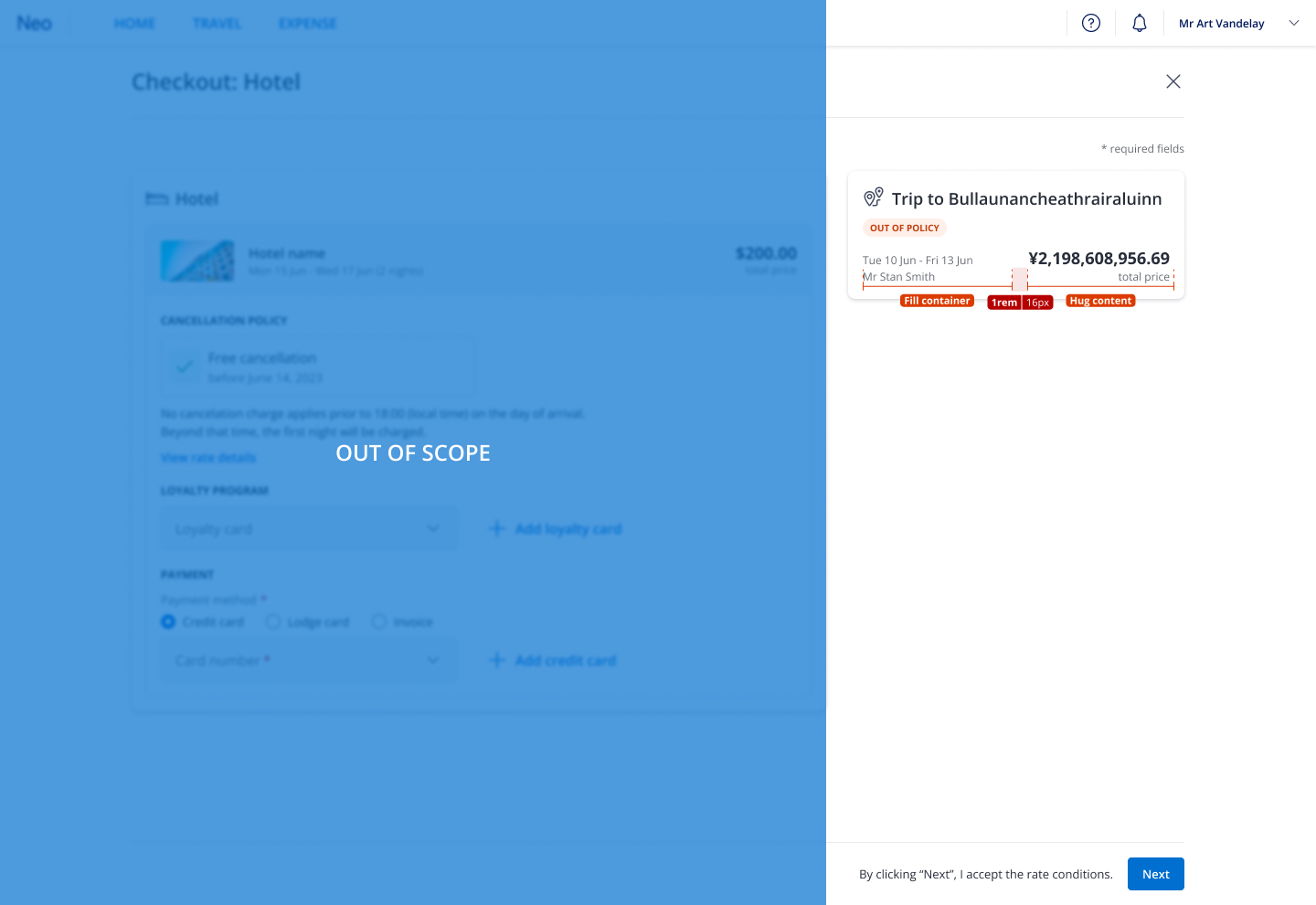
Handoff specs provided to the developers and QA engineers
Outcome & Impact
The complete checkout migration is being finalized, and 80% of the steps have been successfully migrated.
We have made significant progress in development and are beginning to see tangible results:
The number of steps in the checkout flow has been reduced from 19 to 5 by more effectively distributing user input across the flow
The average Time to Book has decreased substantially, from 1 minute and 46 seconds in January 2025 to 1 minute and 32 seconds in March 2025. This early improvement is a promising indicator as we work toward our objective of reducing Time to Book by 35% by the end of the migration.
Once all the steps have been migrated, we will integrate them into a unified, single-page checkout that aligns with our original vision.
Learnings & Reflections
Throughout the project, considering the lack of time we had, we learned the importance of collaboration and iterative testing. Engaging stakeholders early and often helped us refine our vision and align our goals with user needs.
Conclusion
The migration of the checkout process is a significant step towards enhancing the user experience on the Neo platform. By addressing the technical debt and streamlining the process, we aim to improve user satisfaction and increase adoption rates.